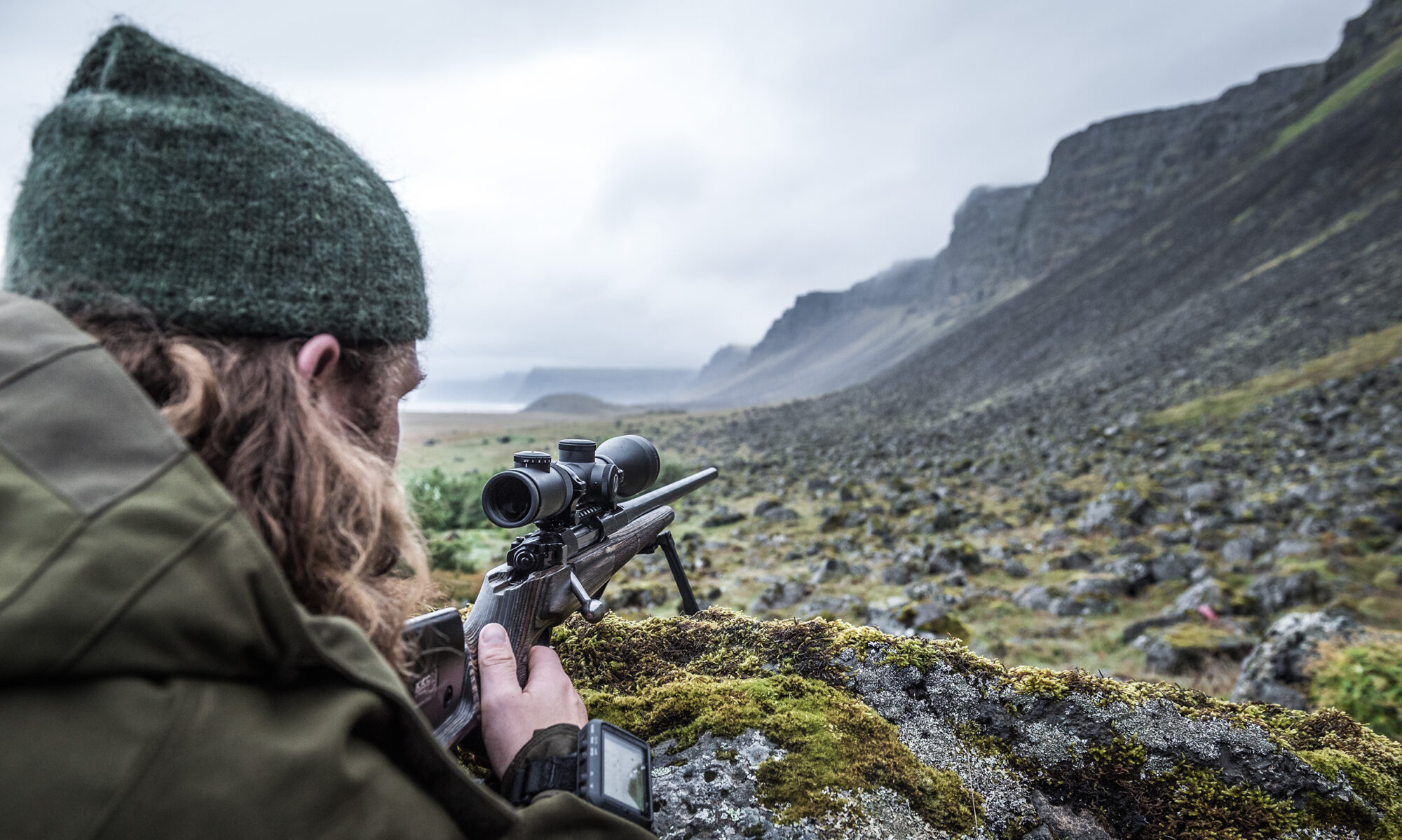

The Pursuit of the Uncompromising
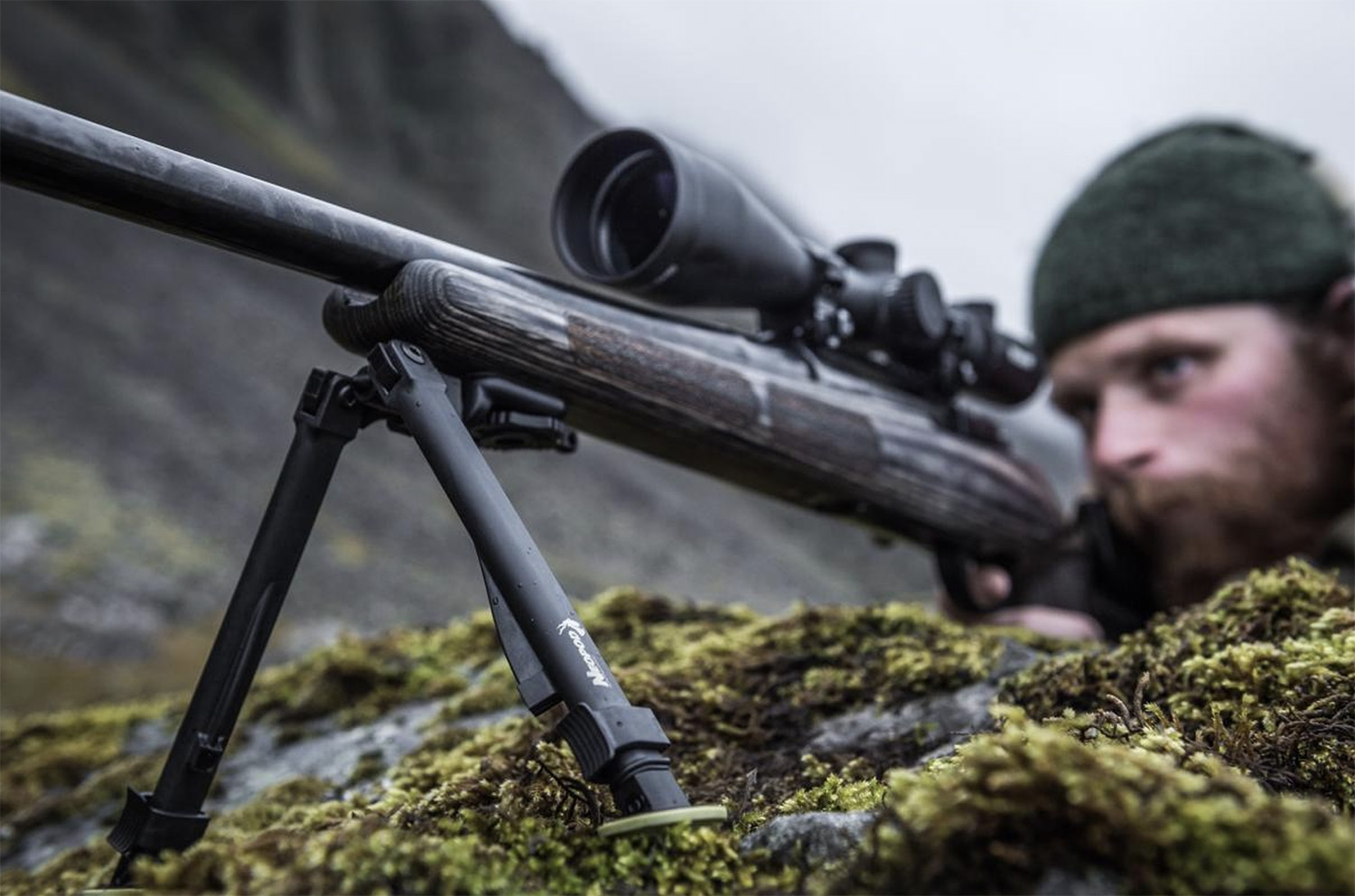
The NeoPod Ultralight Bipod has reached the end of its production run. For over a decade, we have pushed the boundaries of what is possible in shooting and hunting technology. Our mission remains unchanged: to fill the absolute voids where the necessary gear is currently non-existent.
Our Philosophy: For the Dedicated Elite
At Steinert Sensing Systems, we do not build products to simply occupy shelf space. We are fuelled by a singular passion: to create the unique. If an effective alternative already exists on the market, we are simply not interested. We exist to solve specific problems that the mass market—and its everyday production methods—chooses to ignore.
We do not design for the masses. We design for the enthusiast—the individual who understands that true optimization requires specialization. By choosing a Steinert product, you are identifying with a dedicated elite of users. We accept the risk that our products are not for everyone; in fact, we embrace it. To make a product for everyone is to embrace compromise in materials, utility, and vision.
Instead, we stretch our designs toward a level of specialization that requires user knowledge and dedication. This is our passion: to go further than anyone else in optimizing for a given use case. We do not do this as a commercial necessity. We take the resources and capital earned from our other business ventures and invest them into creating the products we want for ourselves.
“Think of it as the difference between buying an ordinary, functional house versus starting from scratch with the finest architect, choosing the best interior, and the most exquisite furniture. One provides shelter; the other brings joy in every detail and execution. It is a feeling worth the extra investment and the extra care required in its use.”
The Portfolio: A History of Solving the «Impossible»
I. SuperChrono: The Acoustic Revolution (2012–2014)
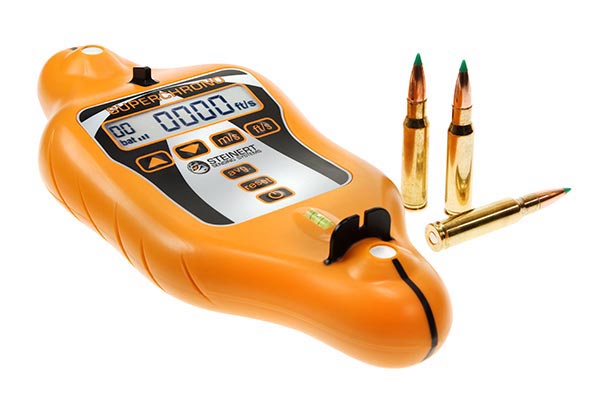
The world’s first and only acoustic shooting chronograph.
When we launched the SuperChrono in 2012, it was a direct challenge to the optical chronographs of the time. Those units were fragile, vulnerable to sunlight, and required shooters to aim through narrow «skyscreens»—leading to many units being destroyed by stray shots.
The Innovation:
The SuperChrono was an exercise in efficient product development, moving from initial idea to first sale in just 14 months. We sold thousands within the first few months. Because it used acoustic sensors, it sat safely below the bullet path and was immune to lighting conditions. A decade later, we still receive messages from shooters who rely on their SuperChrono every time they head to the range.
The Complexity of Precision:
However, we learned that we had designed a professional instrument for a user base that did not always grasp its specialized requirements. Although intended for rifles, the unit featured front and rear sights similar to a pistol. We found that many rifle shooters lacked the understanding of a correct pistol sight picture, leading to misaligned setups.
In acoustic technology, precision is everything. Even a minor variation in pitch (the vertical angle relative to the bullet path) results in significant velocity measurement errors. Furthermore, we encountered the challenge of aphantasia—a condition where roughly 4% of the population cannot mentally visualize the alignment required between the muzzle, the sensors, and the target.
The Pursuit of the 3D Solution:
We did not simply walk away. To solve these user-alignment issues, we contacted world-leading mathematics experts at Chalmers University of Technology in Sweden. Our goal was to develop a complex sensor array and algorithms for a 3D-sensing version that would be intuitive for all users. At that time—over ten years ago—the mathematical and processing complexity exceeded the technological frontier. While modern AI solves this today, the technology of the era could not meet our uncompromising standards for the user experience. Rather than continue with a product that required excessive customer support, we chose to withdraw it from the market.
II. NeoPod: The 82-Gram (2.9 oz) Benchmark (2014–2024)
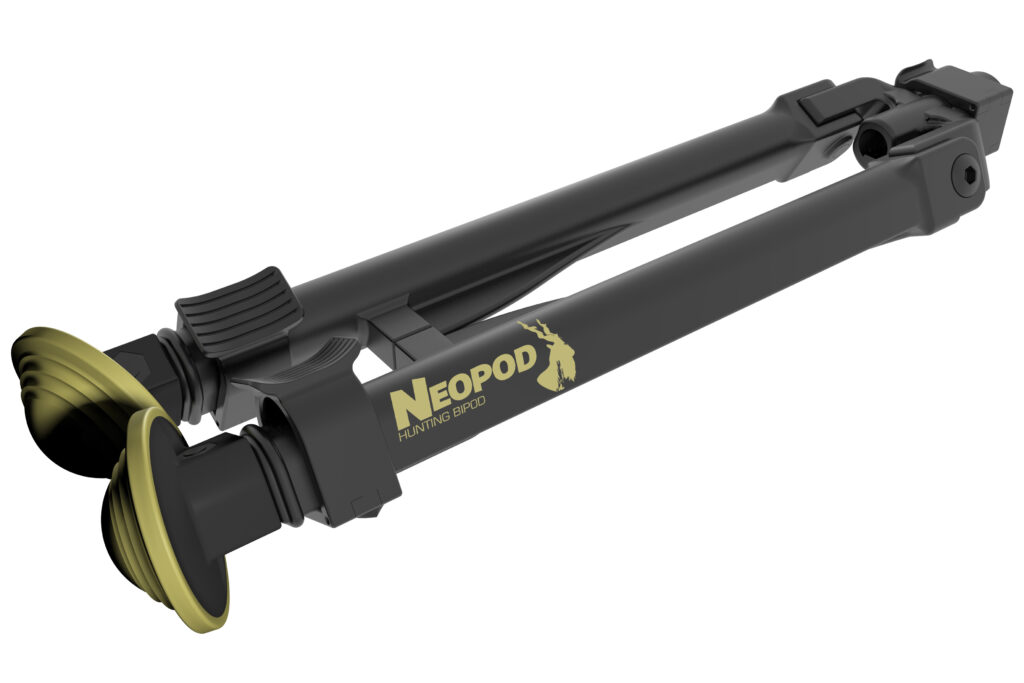
The world’s lightest hunting bipod.
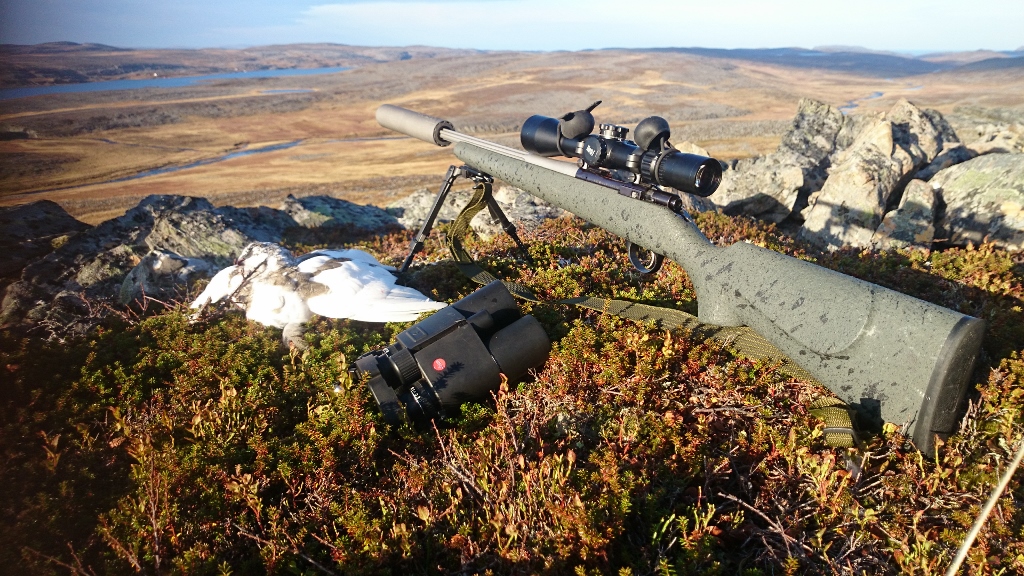
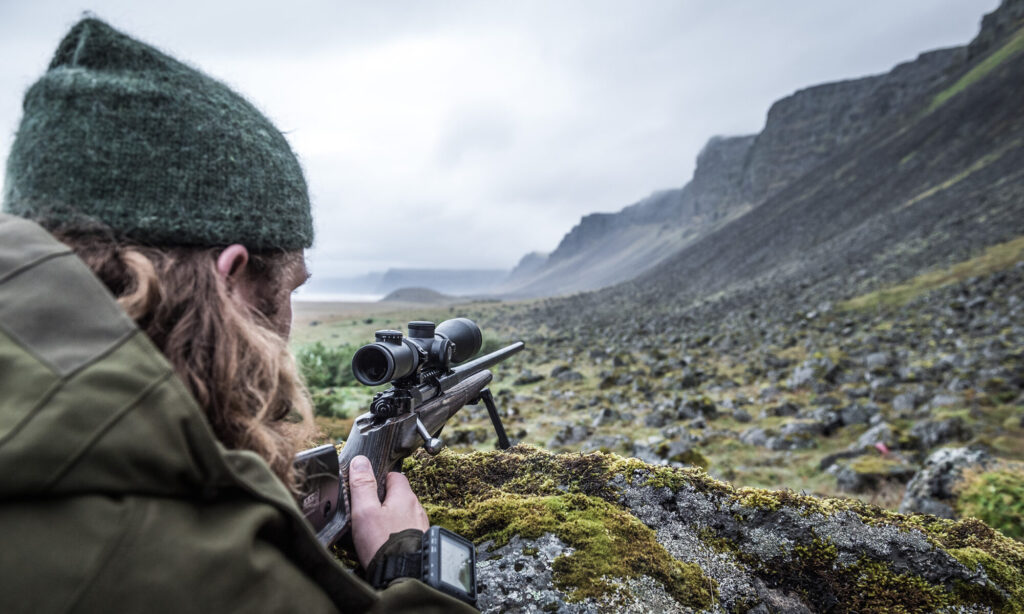
The NeoPod was born from a specific need: alpine hunting for ptarmigan. This involves long treks in rugged mountains where every gram is felt, yet requires rock-solid stability for small targets at long distances. At the time, the market was limited to clunky Harris bipods, heavy Versapods, or Picatinny-only Atlas units.
The Engineering Brief:
We wanted a bipod that was ultralight, fast to deploy with one hand (even with cold fingers), and slim enough to slide into an Eberlestock scabbard.
● Materials: We traveled to Taiwan, the global hub for high-tech manufacturing, to source the best production. We utilized carbon-reinforced PEEK—the world’s most advanced polymer—which surpasses standard carbon fiber in durability and performance.
● Mechanics: We replaced traditional springs with a magnetic system, a process that required advanced plasma surface treatment and complex assembly.
● Design: We spared no expense on the industrial design, logo, and packaging, utilizing the best designers in the field. The result was a flush-to-barrel masterpiece with dedicated adapters for Sauer, Blaser, Mauser, and standard Picatinny/stud mounts.
The Regulatory «Slap in the Face»:
Despite an immediate success and thousands of units sold, we hit a bureaucratic wall. The Norwegian authorities classified the NeoPod as «export controlled.» This meant that every single sale outside of Norway required a manual application, a waiting period, and post-sale reporting.
Being outside the EU, the combination of customs paperwork, export bureaucracy, and a stifling domestic tax climate—including wealth tax on unsold stock and high dividend taxes—made global expansion a burden rather than a joy. We chose to pivot, focusing only on the Norwegian home market, and stopped further development of prototypes, including a combined sitting/prone version.
The Specialized Instrument:
The NeoPod is a precision tool, much like a high-end carbon fly rod or a racing ski pole. It was designed for the open mountains. We learned that users who took it into dense brush or loaded the bipod with excessive forward pressure beyond its design limits could cause damage. We could have designed a Mark II with wider margins for the general public, but doing so would have sacrificed the very purity of the 82-gram brief.
Today, the void we filled in 2014 is populated by many other bipod options. Since we only exist to create what is unique, we have chosen to close this chapter and sell out our final production run.
About the Founders: The Pedigree of Steinert
Steinert Sensing Systems is not a traditional commercial entity; it is a laboratory for passion. Our founders have spent their careers as owners of significant international companies with employees and sales in multiple countries.
Our work is backed by a world-class background in:
● Marketing Strategy and Software Architecture .
● High-end Electronics and Acoustic Signal Processing
● Field Experience: We are, first and foremost, dedicated hunters and shooters who test our own theories in the field.
We do not need to make these products to live. We create these products because we possess a unique set of skills and we refuse to settle for the fact that the gear we demand is currently unavailable.

The Future
We are not gone; we are simply scanning the horizon. Steinert Sensing Systems will remain a quiet observer until we find a new gap in the market—a problem that demands a solution that is unique, technologically advanced, and entirely without compromise.
The product development goal we’ve refined over a decade is clear: keep all the struggle with complexity on the inside and deliver only pure simplicity on the outside.